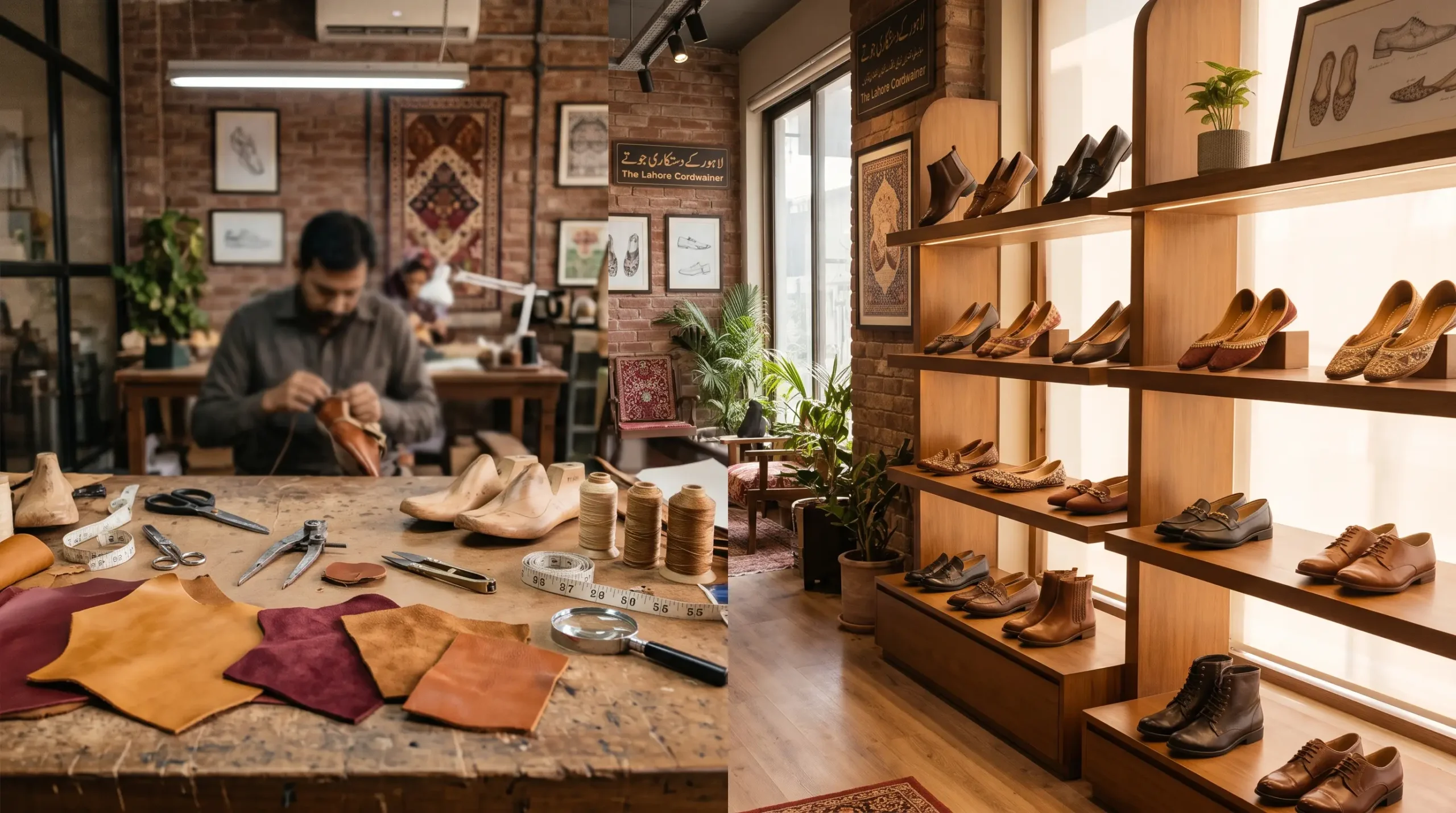
Finding a reliable women’s shoe manufacturer in Lahore is a critical step for any brand looking to produce quality footwear without the risks of middlemen, delays, or inconsistent quality. Lahore has a long history in leather goods and footwear production, but not every factory operates with the transparency and professionalism that international B2B buyers require.
This guide walks you through what to look for, what questions to ask, and how a direct manufacturer like Lajwanti Collections approaches the process.
Why Lahore for Women’s Footwear?
Lahore is one of Pakistan’s key manufacturing hubs for leather and footwear. The city’s skilled workforce and established supply chains make it a practical sourcing destination for brands seeking competitive pricing without sacrificing workmanship. However, the market also includes many trading companies and agents who present themselves as manufacturers. The difference matters: a direct factory controls production timelines, quality checks, and communication .
If you are evaluating a women’s shoe manufacturer in Lahore, the first step is confirming whether they handle core operations in-house or outsource them. Lajwanti Collections, for example, handles cutting, stitching, lasting, assembly, finishing, and packing within its facility, while selected decoration processes are completed through trusted specialist vendors . This hybrid structure keeps quality control tight while offering a wide range of finishes.
Internal resource: For a full overview of available categories, visit the Women’s Shoes to see the range of block heels, pumps, sandals, flats, and bridal styles available for private label development.
What to Look for in a Reliable Manufacturer
Verifiable Manufacturing History
A factory that has operated for years has likely handled repeat orders, seasonal collections, and private label rollouts. Lajwanti Collections has been manufacturing since 2003, which means the team has navigated material shortages, production scaling, and international shipping requirements across dozens of product types . Ask for the year operations began and whether the facility can share examples of past work (without disclosing client identities).
Transparent MOQ and Sampling Process
Traditional factories often require hundreds or thousands of units per style. This is impossible for a new brand testing the market. A reliable manufacturer should offer low-MOQ options and a clear sampling path. At Lajwanti Collections, the verified MOQ for women’s footwear is 12 pairs per design, per color . Samples are paid, and initial development typically takes 10–14 days after specifications are confirmed. Bulk production follows after sample approval, usually within 4–6 weeks .
Clear Communication and Documentation
From the first inquiry, a professional manufacturer will ask for specific details: product category, reference images or tech pack, quantity by design and color, material preferences, size range, logo placement, packaging requirements, and destination country . If a factory gives vague answers or avoids discussing sample costs and timelines, that is a warning sign.
Quality Control Before Shipment
Quality checks should be tied to the approved sample. Ask whether the factory inspects materials, measurements, stitching, and branding before packing. Lajwanti Collections documents these checks and aligns them with the approved specification .
The Development Process, Step by Step
A structured process protects both the buyer and the manufacturer.
Brief submission: You share the product type, reference design or sketch, quantity, materials, colors, sizes, branding, and packaging needs.
Feasibility and quotation: The team reviews feasibility, flags missing specifications, and confirms pricing and sample costs.
Paid sample development: A physical sample is produced for your review. This is where construction, fit, color, and finish are tested.
Approval: You approve the sample or request revisions.
Bulk production: Manufacturing begins against the approved sample.
Inspection and shipping: Final checks are completed, then the order is packed and dispatched .
Internal resource: Review the Private Label Women’s Shoes Manufacturer page for detailed capability information, including customization options for materials, heel construction, and packaging.
Questions to Ask Before Committing
How long have you been manufacturing women’s footwear?
Do you handle production in-house or through third parties?
What is the MOQ for my specific design and color?
What is the sample cost and timeline?
Can you provide a written quotation with all specifications?
How do you handle quality issues or revisions?
What are the shipping terms and who handles customs documentation?
A reliable manufacturer will answer these directly without pressure or evasion.
Working with Lajwanti Collections
Lajwanti Collections operates as a direct B2B manufacturer from Lahore, Pakistan. The company produces women’s footwear across nine categories—including block heels, pumps, sandals, bridal shoes, and platforms—for brands, wholesalers, and retailers worldwide . Buyers can start from an existing design or submit their own sketches, reference samples, or tech packs. Confidentiality is supported through an NDA available on request.
FAQs
What is the minimum order quantity for women’s shoes?
The verified MOQ for women’s footwear at Lajwanti Collections is 12 pairs per design, per color. Exact order planning depends on the design, materials, size range, branding, and packaging requirements .
How long does sampling take?
Initial women’s footwear samples are typically developed in 10–14 days after final specifications are confirmed. Shipping time and any revisions are separate .
How long does bulk production take?
Bulk production is typically completed in 4–6 weeks after sample approval, subject to the approved specifications, quantity, and production schedule .
Can I start from my own design?
Yes. You can submit a sketch, reference sample, mood board, or tech pack for feasibility review. Alternatively, you can start from an existing Lajwanti Collections design and customize materials, colors, branding, and packaging .