Description
Custom Leather Bomber Jacket Manufacturer is positioned as a B2B development page for fashion labels, streetwear brands, outerwear retailers, wholesalers and sourcing teams. Its role is to help a commercial buyer evaluate bomber silhouette with rib-knit collar, cuffs and hem, front zipper closure and sleeve utility-pocket direction shown on the current page, while keeping the broader leather-jacket manufacturer intent with the parent category. Lajwanti Collections supports private-label, OEM, ODM, custom and made-to-order manufacturing from Lahore, Pakistan; exact apparel MOQ, sample timing and production timing remain quotation-specific.
Custom Leather Bomber Jacket Manufacturer for Relevant B2B Buyers
The page should serve buyers who already have a collection objective, reference image, target market or technical direction and need a manufacturing conversation rather than a retail product pitch. For this product, the core sourcing task is a bomber-specific development route rather than a generic leather-jacket manufacturing page. A useful enquiry therefore starts with intended quantity, target sizing, style references, branding requirements, destination market and the commercial purpose of the run. Retail language such as personal wardrobe advice, one-off fit promises or consumer checkout messaging should be removed. The custom leather bomber jacket manufacturer phrase should appear naturally where it clarifies the sourcing route, not as a repeated sentence pattern.
Product Style, Materials and Customisation
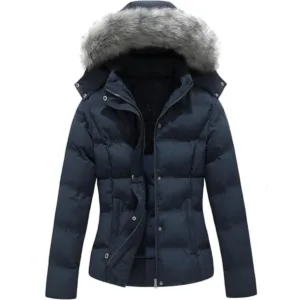
The current page provides a workable style direction: Current page imagery/copy shows a blue bomber direction with rib-knit collar/cuffs/hem, front zipper and sleeve utility pocket; exact leather grade, lining and hardware specification still require approval. That evidence is enough to define the page’s product angle, but it is not a licence to invent hidden construction details. The final quotation should confirm the selected outer material, finish, lining, hardware, stitching/construction, measurements, grading, trims, labels and packaging. Where the buyer requests alternatives, the page can say that options may be reviewed subject to technical feasibility and finalised after sample approval. Exact material species, leather grade, lining composition, zipper brand, garment weight and performance properties should not be published unless first-party evidence supports them.
Customisation should be explained as a decision process rather than an unlimited promise. The buyer can submit references for silhouette, fit, colour, surface appearance, closure layout, pocket configuration, hardware direction, lining concept, brand marks, labels, hangtags and packaging. Lajwanti Collections can then assess feasibility and quote the confirmed specification. This keeps the product commercially useful without implying that every requested material or construction method is automatically available. For a repeat-order program, approved measurements, artwork positions, trim references and packing rules should be retained as the buyer-controlled baseline so later orders can be compared with the same agreed reference.
Buyer Decisions to Confirm
- Bomber silhouette and intended market
- Rib-knit collar/cuff/hem direction
- Front and sleeve zipper/hardware direction
- Pocket layout and panel lines
- Colour/finish target
- Lining direction
- Size range and grading basis
- Labels, hangtags and branded packaging
Private Label, OEM and ODM Manufacturing
Private label, OEM and ODM describe different development routes. Private label is appropriate when the buyer wants the approved jacket supplied for sale under its own brand. OEM is the better description when the buyer provides a defined design, reference, measurement set, tech pack or specification and wants production aligned to it. ODM can apply when a buyer starts from an existing Lajwanti direction and adapts it for its market. None of these labels replaces the need for a clear specification. For this bomber jacket, the approval record should capture the chosen style direction, materials to be confirmed, size/grading basis, hardware, branding, packaging, quantity and destination before bulk release.
MOQ, Paid Samples and Bulk Production
Apparel does not have one verified universal numerical MOQ in the supplied company rules. Low-MOQ possibilities may exist, but the exact minimum for this project must be confirmed during quotation after the garment, material direction, construction, colours, trims, labels, packaging and quantity are known. Sample cost, sample timing and production timing are also quotation-specific for apparel. The sample is paid, not automatically free, and bulk production should begin only after the sample/prototype and specification are approved. This wording replaces any fixed 10–14 day sample or 4–6 week apparel production statements that appear on current leather-jacket pages, because those timing figures are verified for women’s footwear, not apparel.
Five-Stage Buyer Journey
A practical five-stage buyer journey keeps commercial decisions controlled. First, the buyer shares the brief: product references, quantity, target sizes, colours, branding, destination and any required packaging. Second, Lajwanti reviews feasibility and issues a quotation with the project-specific MOQ, sample scope and schedule. Third, a paid sample or prototype is developed against the agreed direction. Fourth, the buyer approves the sample and confirms the written specification, including any revisions. Fifth, bulk production proceeds against the approved reference, followed by relevant checks, packing and shipping arrangements. If materials, artwork or quantity change after approval, the commercial and production impact should be reconfirmed rather than assumed.
Quality Control Against Approved References
Quality control should be tied to what the buyer approved, not to generic adjectives. For bomber jacket, relevant checkpoints may include bomber silhouette against approved sample, rib component dimensions and attachment, zipper placement and operation, pocket placement, approved colour/finish reference, garment measurements and grading, branding/label placement, and packing against buyer allocation. The exact inspection plan depends on the finished specification and order. If a buyer needs special testing, certification or tolerance reporting, that requirement should be raised before quotation and supported with evidence before it is published as a capability. The page should not claim waterproof, protective, abrasion-resistant, breathable, reinforced, tested, certified or other performance properties unless the specific product and evidence support those terms.
Product Care and Handling
Care and handling depend on the final approved material, finish, lining, hardware and decoration. The product page should therefore avoid one universal cleaning or storage instruction. Instead, final care guidance should follow the confirmed material supplier or product specification and be supplied with the order where appropriate. For buyer-side warehouse handling, cartons, folding or hanging direction, protective wrapping, size stickers and assortment rules can be agreed during packaging approval. This is especially important when surface finish or hardware presentation is part of the product’s visual identity, because unsuitable handling can affect appearance before retail or wholesale distribution.
Why Work with Lajwanti Collections?
Lajwanti Collections is a Lahore, Pakistan-based B2B manufacturer operating since 2003. Verified business routes include private label, OEM, ODM, custom and made-to-order manufacturing across Apparel, Women’s Footwear and Sports Uniforms / Teamwear. For this page, the buyer benefit is not an unsupported promise of the lowest MOQ or fastest production; it is a structured quotation-and-approval route in which the product brief, paid sample/prototype, approved specification, branding and packaging are documented before bulk production. Worldwide shipping support is available, while freight method, cost, documentation and delivery timing remain order-specific.
Procurement Notes
A strong RFQ for this product should distinguish non-negotiable requirements from preferences. The buyer should identify the target customer, approximate quantity, size range, fit direction, visual references, required branding, packaging and destination. Where the design relies on a distinctive finish, collar, pocket, panel or hardware treatment, reference photos or annotated sketches reduce ambiguity. The quotation stage can then confirm what is technically feasible and what needs revision. This procurement-led approach is more useful for brands and sourcing teams than repeating broad manufacturer phrases, and it protects the parent category from cannibalisation while giving this URL a genuinely narrow job.
Request a Manufacturing Quote
To request a manufacturing quote for bomber jacket, send your product reference, expected quantity, size/grade direction, colour or finish target, hardware and pocket requirements, branding files, packaging needs and destination country. Use the RFQ form, WhatsApp at +92 333 941 1234, or email info@lajwanticollections.com. Lajwanti Collections can review the brief, confirm feasible options and provide quotation-specific MOQ, paid-sample scope, schedule and commercial terms. Do not treat website examples as a final specification; the approved sample and written order details should remain the production reference.