Description
Lajwanti Collections can be positioned as a small batch leather jacket manufacturer for B2B buyers only when the page makes one point clear: small-batch availability is a project-specific sourcing route, not a universal numerical MOQ promise. The page is designed for brands and sourcing teams testing or extending a leather-jacket line through paid sampling, approval and quotation-specific production terms.
This distinction gives the URL a practical job that the broad leather-jackets category should not perform. The parent category owns the general custom leather jacket manufacturer intent. This page should instead answer the questions asked by buyers planning a limited first run, capsule collection, controlled market test or smaller repeat program: what information is needed, how the minimum is confirmed, what decisions affect feasibility, and how a sample becomes the approval reference for production.
Small Batch Leather Jacket Manufacturer for Relevant B2B Buyers
The most relevant buyers include startups, emerging labels, boutiques, ecommerce brands, wholesalers testing a new style and established businesses adding a limited leather outerwear direction. The page should not suggest that every design is available at the same low quantity. Leather-jacket feasibility can change with material selection, colour, components, grading, branding, packaging and the amount of development required.
A small-batch enquiry is strongest when the buyer arrives with a focused brief, following guidance on what to send a manufacturer for quote. Useful inputs include the intended jacket type, reference images or sample, target customer, destination market, estimated quantity, measurements or size chart, material and finish direction, colourways, trims, labels and packaging. If some details are missing, they can be identified during feasibility review rather than invented by the product page.
Product Style, Materials and Customisation
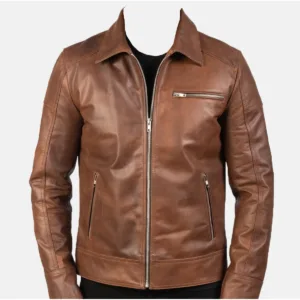
This page is differentiated by procurement scale, not by one fixed silhouette. For that reason, it should avoid pretending that the product always uses a particular collar, zipper layout, leather grade, lining or fit. The buyer may be developing a biker, cafe-racer, bomber, cropped, fitted or another leather-jacket direction, but the selected style and its construction must be confirmed for the individual project. A buyer with a defined moto-inspired brief may also review the custom leather motorcycle jacket development route.
Material options, colours, finishes, lining, hardware, fit and size grading are discussed in relation to the chosen design and target market. Branding can include approved private-label labels, size and care information, hangtags, patches or other feasible logo applications. Packaging is also confirmed per project. The approved sample should bring these decisions together so the smaller production run is based on one documented reference rather than a collection of unconfirmed options.
Buyer Decisions to Confirm
Confirm the exact jacket style, intended quantity, target market, buyer-supplied references, material and finish direction, colourways, measurements and grading, lining, components, brand labels and artwork, packaging, destination country and target delivery requirement. Also identify which details are fixed and which can be adjusted to improve small-batch feasibility.
Private Label, OEM and ODM Manufacturing
Private label, OEM and ODM is relevant when the buyer wants the jacket developed for sale under its own brand. OEM applies when a buyer supplies a design, sample, technical specification or measurements for manufacturing. ODM is the route when an existing product direction is used as a starting point and modified through agreed choices. A small-batch project can use any of these routes, but the commercial feasibility still depends on the actual specification.
For smaller programs, reducing unnecessary complexity can make development clearer. That does not mean the manufacturer should advise the buyer to accept inferior specifications; it means separating essential brand and product requirements from optional variations. For example, a buyer can decide whether multiple colours, several hardware finishes or highly varied packaging are genuinely needed in the first run. Those decisions belong in quotation and sampling, not in generic promises on the page.
MOQ, Paid Samples and Bulk Production
The verified company rule for apparel is precise: low-MOQ options may be available, but there is no universal published numerical MOQ. The exact minimum depends on the garment, material, construction, colours, decoration, labels, packaging and specification. Therefore this page may target the phrase small batch leather jacket manufacturer only while clearly explaining that the minimum is confirmed after feasibility review.
Sampling is paid for apparel, with cost and timing confirmed for the individual project. The five-stage journey begins when the buyer Shares the Brief. Lajwanti Collections then completes Feasibility and Quotation, followed by Paid Sample Development. The buyer completes Sample and Specification Approval, after which Bulk Production, Checks, Packing and Shipping can begin. This approval gate is particularly important for a smaller run because the buyer needs clarity before committing production funds.
Production timing is not published as one standard apparel figure. It can vary according to materials, components, revisions, quantities, packaging and production planning. A reliable quotation should therefore confirm the schedule for the exact project rather than borrowing footwear timings or another leather-jacket page’s legacy claims.
Quality Control Against Approved References
A smaller quantity does not remove the need for a defined reference, and checks should follow a quality control checklist before shipment. Appropriate checks may include material and colour direction, agreed measurements and grading, seam and panel construction, selected hardware, lining, label and logo placement, visible finish and packing. The specific checklist should follow the chosen jacket style and final specification.
The approved sample gives both parties a practical standard for review. If a component, measurement or visual detail changes after sample approval, the change should be documented before production. This helps reduce ambiguity and gives the buyer a clearer record for future repeat orders or for scaling the same style into a larger program.
Product Care and Handling
Care instructions are determined by the final shell, lining, finish and decoration. Because this page can represent different leather-jacket constructions, it should not publish one material-specific care routine. The finished order should carry care guidance suitable for the approved materials, while packing requirements should be agreed to protect product presentation during storage and international shipping.
Why Work with Lajwanti Collections?
Lajwanti Collections has operated since 2003 in Lahore, Pakistan and supports private-label, OEM, ODM and made-to-order manufacturing. Apparel projects use project-specific MOQs, paid sampling arrangements and production schedules rather than a single universal figure. Worldwide shipping support is available, and production begins after sample and specification approval. These verified facts allow the page to answer small-batch buyer questions without inventing capacity, turnaround or minimum-order promises.
Request a Manufacturing Quote
Send the intended jacket style, approximate quantity, target market, destination country, references or tech pack, measurements, material and finish direction, colourways, branding files, packaging requirements and target delivery requirement. The team can review whether a small-batch route is feasible for that specification, confirm the exact MOQ and paid sample terms, and define the next step without weakening the parent leather-jacket category’s broader keyword ownership.