
Why Learn How to Make My Own Shoes?
The dream of creating something truly personal and unique has always been a strong motivation for people who want to express their individuality. When you think about how to make my own shoes, it goes beyond stitching leather and fabric together. It is about designing footwear that reflects your style, your comfort needs, and your creative imagination. Unlike ready-made footwear you buy off the shelf, making your own pair gives you complete control over design, materials, and comfort. At this point, many people also begin to think about turning that personal hobby into something more professional, and that is where understanding the real process of how the shoes are made becomes vital.
The idea of handcrafting your own shoes also allows you to understand why major shoe manufacturing companies and custom shoe manufacturers like Lajwanti Collections invest so much into research, prototypes, and quality control. By experimenting with your own designs, you begin to appreciate the detail behind a pair of Italian shoes or the dedication that goes into creating a line of private label footwear manufacturers. For an enthusiast, it can be a rewarding journey that deepens respect for the craft, while for an entrepreneur, it can be the first step toward launching an innovative brand in a competitive footwear industry.
Materials and Tools You’ll Need
Anyone curious about how to make your own shoe brand must first understand that the journey begins with materials. Leather, suede, canvas, rubber, and synthetic fabrics are the foundations of footwear, and choosing the right combination determines not only how a shoe looks but how long it lasts. When large factories produce bulk shoes, they often select materials based on cost efficiency, but for personal projects, quality is usually the priority. It is here that one notices the difference between footwear manufacturers Italy vs Pakistan, as Italian producers often emphasize premium leathers, while Pakistani manufacturers like Lajwanti Collections balance affordability and craftsmanship.
Beyond raw materials, the tools you need form the backbone of the craft. A professional shoe factory uses industrial machines for cutting, shaping, and stitching, but for someone working on their own design, hand tools such as knives, awls, hammers, and adhesives are often enough. The most critical component in this process is the shoe last, which is the mold that gives structure to your design. Once you have these, you can begin experimenting with ideas that might one day evolve into products crafted by private label shoe manufacturers on a larger scale.
Step-by-Step Guide: How to Make My Own Shoes
When learning how to make my own shoes, it is essential to follow a process that begins with imagination and ends with execution. The first step is always design, where you translate your idea onto paper. Whether you want to focus on heels for shoes, flats, or sneakers, the drawing gives you a roadmap of what you are about to create. Once this vision is clear, selecting the right materials becomes easier, as you can choose leather for elegance, canvas for comfort, or synthetics for modern designs. This is exactly how shoe prototype makers begin their work in professional settings, creating models that eventually become marketable products.
The next stage is bringing the upper part of the shoe to life. Panels of fabric or leather are cut and stitched together, carefully shaped over the last to provide structure. The process demands patience because the fit, flexibility, and comfort of the shoe depend on precision. Once the upper is ready, it is joined with the sole, where adhesives and stitching make the design durable. From this point, finishing touches such as polish, accessories, or experimenting with different types of heels are added to refine the look.
By the end of this journey, you not only have a pair of shoes but also an understanding of why working with a custom shoe manufacturer like Lajwanti Collections can be the logical next step when scaling from personal creation to professional distribution.
From DIY to Business: Scaling Your Shoe Idea
For many, the process of how to make your own shoe brand starts as a hobby in their living room but quickly evolves into a business idea once friends and family notice the uniqueness of their work. One pair of handcrafted shoes can become the inspiration for an entire line, but producing footwear in large quantities requires expertise, infrastructure, and networks that individual creators often lack. This is why partnerships with private label footwear manufacturers and white label shoe manufacturers become vital for growth. They provide the ability to maintain your design identity while scaling production for a larger audience.

At Lajwanti Collections, we guide entrepreneurs who begin with a simple prototype toward mass manufacturing. We specialize as custom shoe manufacturers for women, providing both creativity and consistency in bulk production. With our help, a designer can focus on innovation while we ensure the technical side of production meets international standards. For anyone passionate about expanding beyond DIY, understanding this transition is the most critical step to becoming part of the professional network of shoe manufacturing companies that distribute globally.
Popular Styles You Can Create
The art of shoe design opens doors to an incredible variety of styles. When experimenting with different types of shoes, you might start with casual sneakers or flats but quickly realize the potential of exploring high heels kinds such as stilettos, wedges, and block heels. Each type demands a different construction approach, from the balance of the sole to the strength of the stitching. For beginners, working on simpler designs helps build confidence before moving to more complex kinds of heels and luxury fashion concepts.
In the professional arena, private label footwear manufacturers focus on popular categories based on market demand. For instance, Italian shoes are often celebrated for luxury and elegance, while bulk shoes made in Pakistan combine affordability with durability. By working with a company like Lajwanti Collections, you gain access to both worlds—understanding the craftsmanship of handmade designs while also exploring cost-effective strategies for wholesale distribution. This balance allows you to bring unique ideas into reality without being limited by resources.
Why Partner with Lajwanti Collections?
When you are passionate about learning how to make my own shoes, the process can feel overwhelming if you intend to transform it into a business. Partnering with the right manufacturer makes all the difference. At Lajwanti Collections, we are more than just another shoe factory. We combine decades of craftsmanship with modern technology to deliver shoes that meet both aesthetic and functional expectations. Our work with private label shoes ensures that your brand identity is preserved, whether you are starting small or planning to launch internationally.
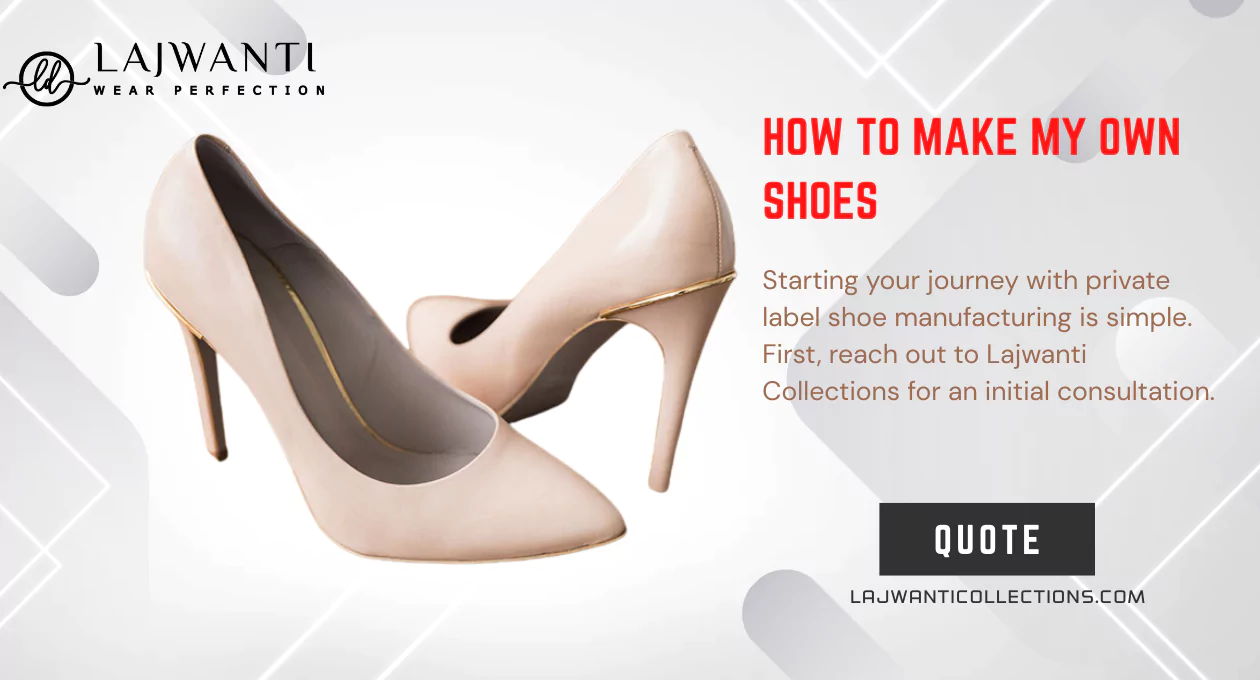
Our expertise lies in supporting designers and entrepreneurs at every stage. From assisting shoe prototype manufacturers in shaping their ideas to delivering bulk shoes that meet global demand, we maintain flexibility and reliability. Unlike other shoe manufacturing companies, we understand the unique needs of small designers who want to scale without compromising creativity. This makes us the perfect partner for those who begin with the thought of how to make my own shoes and dream of evolving into recognized names in global footwear markets.
FAQs
Can I really learn how to make my own shoes at home?
Yes, with basic tools and patience, you can start small by creating simple designs. Over time, you can refine your skills before moving to professional production.
What materials are best for beginners in shoe making?
Leather and canvas are the most beginner-friendly materials. They are easier to shape, durable, and commonly used by shoe prototype makers.
How do I turn my handmade shoe into a business?
Start by making prototypes and testing them with your audience. Then partner with private label footwear manufacturers like Lajwanti Collections for bulk production.
Why should I choose Lajwanti Collections for custom shoe manufacturing?
We specialize in custom women’s shoes and support small designers in scaling their ideas. Our expertise in bulk production and private label shoes ensures quality and affordability.
Are handmade shoes different from factory-made shoes?
Handmade shoes highlight creativity and uniqueness, while factory-made shoes offer consistency and scalability. At Lajwanti Collections, we combine both strengths to deliver the best.
Final Thoughts
The journey of discovering how to make my own shoes is about much more than cutting leather or sewing fabric. It is about self-expression, creativity, and the possibility of turning a passion into a business. With dedication, anyone can create their own prototypes, but taking that vision further often requires the support of professionals. That is why Lajwanti Collections stands as a reliable partner for those ready to move from hobbyist to entrepreneur. With our role as custom shoe manufacturers and expertise in private label footwear manufacturing, we bridge the gap between imagination and execution.
By mastering the basics at home and then collaborating with trusted names in the industry, you can transform a single handmade pair into an entire line of shoes distributed worldwide. Whether your dream lies in crafting different types of heels, designing Italian shoes, or producing white label shoe manufacturers products, the path begins with a simple idea: the willingness to try and create. Lajwanti Collections is here to ensure that once you take that first step, every stride afterward is toward success.